
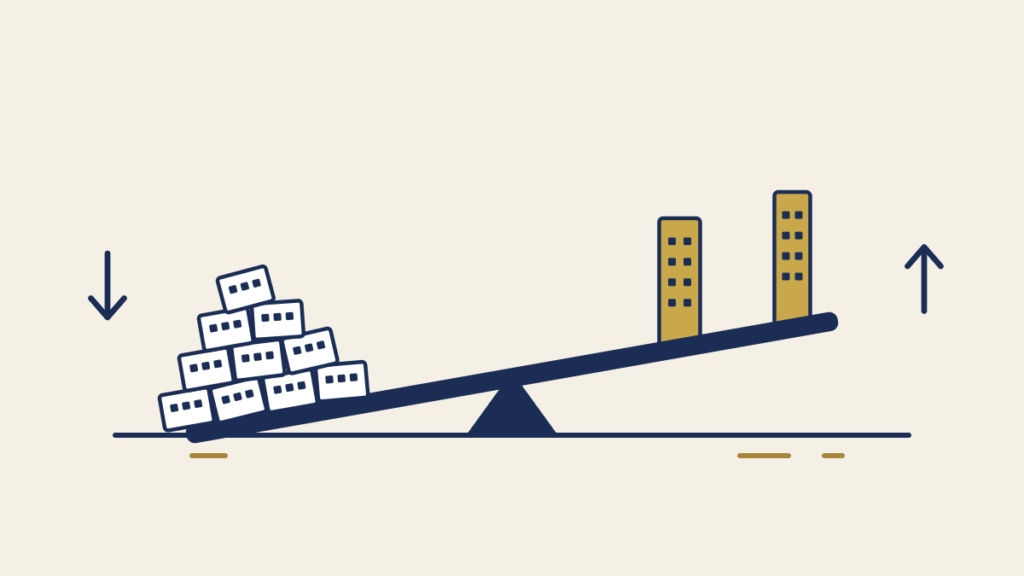
Most people do not remember 2017 to 2019. That period quietly reshaped the market, and the same structural setup is forming again.
- 2017 to 2019: HDB resale fell about 1.5 percent. Private condos rose about 30 percent.
- 55,000 new BTO flats are being launched between the announcement and 2027.
- Close to 40,000 flats reach MOP between the announcement and 2028.
- Developer sales are moving the other way: around 11,000 units in 2024, projected near 9,700 the following year.
- Supply is rising on one side of the market and tightening on the other. That is the same imbalance as last time.
When confidence in HDB was shaken
Back then, HDB flats felt safe. Prices seemed stable, maybe even cheap. The reasoning went: even if condo prices move, my flat will not drop, so I am fine. That is the same sentence I hear today.
Incomes were rising. Interest rates were low. Inflation was calm. Everything felt comfortable.
Then came 2018, when the then Minister for National Development reminded Singaporeans that HDB flats eventually return to the state after 99 years. One statement, and buyers got nervous. Confidence in older HDB resale flats cracked. Transactions slowed. Prices went sideways.
Meanwhile older condos were moving in the opposite direction. En bloc activity swept through the island: Laguna Park, Normanton Park, Park West. Owners who had moved from HDB to private before the market heated up captured that. Those who stayed put spent the period in a cycle of wait first, see how.
They did not lose money on paper. They lost the window.
The supply numbers that are already public
The current MND Minister has been unusually direct about what is coming. Not hinting. Stating it. Watch the segment.
| What was announced | |
|---|---|
| New BTO flats | 55,000, launching through 2027 |
| Flats reaching MOP | Close to 40,000, through 2028 |
| If a quarter of MOP flats list | 10,000 to 15,000 resale HDBs per year |
Demand stays roughly constant. Supply is scheduled to spike. That is not a forecast, it is a published pipeline.
The two markets are moving in opposite directions
Developers sold around 11,000 units in 2024. The following year was projected to land near 9,700, roughly 12 percent lower. So HDB supply is loosening while new private supply is tightening.
| Market | Supply | Buyer choice | Pressure on price |
|---|---|---|---|
| HDB | Rising, BTO plus MOP | More options | Downward |
| Condo | Tightening | Fewer options | Upward |
Directional pressure, not a price prediction. Actual outcomes depend on rates, cooling measures, and absorption.
If you speak to anyone in their 40s or 50s who sold in 2018, the account is consistent. The flat took months to move. Buyers lowballed. Agents said the market was quiet. It was not quiet. It was oversupplied.
The trap is the sentence, not the flat
As long as my price does not drop, I am fine. That sentence has cost more upgraders than any single bad purchase.
Holding feels safe. But the constraint is not the price of the flat. It is you. Every year of waiting shortens your loan tenure, ages you past the bands that determine how much you can borrow, and locks more CPF into a flat you have already decided to leave.
What upgraders are actually doing
Some are moving from older HDBs into newer resale condos. Some are going to ECs. Some are taking equity out of a first private home and moving to a larger unit. The common thread is not the product. It is that they ran their own numbers against a published supply schedule rather than guessing at sentiment.
History does not repeat exactly. But the structural setup rhymes closely enough to be worth checking your own position against it.
The supply schedule is public. Your holding power is not. Start there.
Run the Holding Power Calculator ↗Bring your HDB details, your income, and your worst-case question. If upgrading makes sense, we will map exactly how to do it safely. If it does not, you will hear that clearly, and why. Tell me your situation on WhatsApp.

Supply figures as announced by the Ministry of National Development. Developer sales figures are market estimates. Directional commentary on price pressure reflects supply and demand mechanics, not a forecast of transacted prices. Property decisions depend on individual financial circumstances.
Heikal Shafrudin · Associate Group District Director · PropNex Realty, Singapore · CEA Reg No. R016820G